
Prince George’s Wanted Posts
The Sheriff's Most Wanted page works like a public-safety bulletin board. It is not a master list. Posts appear irregularly, mixing "Felony Arrest" notices with "Wanted Wednesday" features. A typical post carries an agency photo, a poster graphic, offense details, and a tip line. It is not a numbered roster of every open warrant in the county. It is not a booking log for the Correctional Center either, since that facility answers to the Department of Corrections. Dates matter here. Someone flagged one week may be in custody, released, or cleared the next. The old post can linger. Wording on the live page, such as "wanted" or "seeking information," reflects what the Sheriff reported at that moment. The official feed shows how the county keeps these notices separate from its larger warrant search.
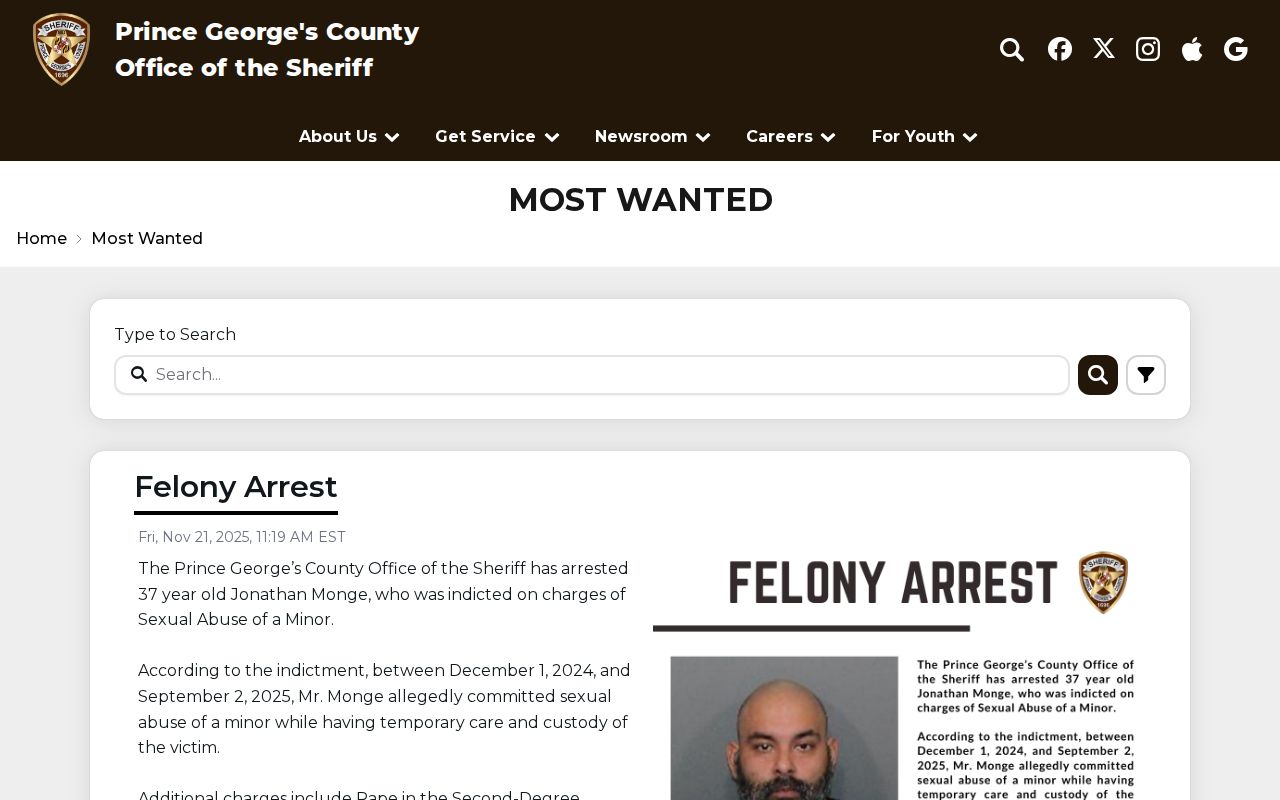
This is a view of the agency's interface, not a collection of reprinted photos. Check the live Sheriff page for current status.
Prince George’s Wanted Listing Fields
No two posts look quite the same. A Wanted Wednesday poster leans on a photo and a tip route. A warrant card may include docket and warrant numbers. Those details help you match the notice to the right person. None of them tells you where that person is today.
| Field | What it means |
|---|---|
| Date | The date shown with the listing or warrant entry, not necessarily a booking date. |
| Image or poster | An official display used for identification; it stays on the Sheriff’s site. |
| Docket number | A court reference that may help locate a related Maryland case. |
| Warrant ID | The Sheriff database identifier shown on some active-warrant cards. |
| Age | The age presented by the public entry at that time. |
| Offense | The alleged warrant basis, not a final court disposition. |
| Submit a Tip | A route for information to law enforcement, not a way to confront the person. |
Names repeat, and the interface changes as the Sheriff updates it. Match on a docket number or warrant ID instead. A similar name alone is not enough.
Use Prince George’s Wanted List
Treat each wanted post as a dated public-safety notice. Don't download an image and pass it around without the agency's current context. Follow the source instead. Go from the post itself to a tip channel or an official status check.
- Open the Sheriff’s live Most Wanted page and note the post date and category.
- Read the full notice, including the agency’s current tip instructions and any status update.
- Match more than a name. Use the displayed warrant, docket, age, or offense fields when available.
- If the person is recognized, do not approach. Call 911 only for an immediate emergency or use an official tip route.
- For later custody, use the county contact and record paths described in the Prince George’s County booking lookup.
Search Prince George’s Warrants
For a name-by-name check, the county offers the Active Warrant Database. It is separate from Most Wanted. A "Type to Search" box sits at the top, and results load as cards. Entries come and go as the Sheriff updates the list. So treat what you see as a snapshot, not a full Maryland or federal warrant history. The official warrant search reflects that search-first design.
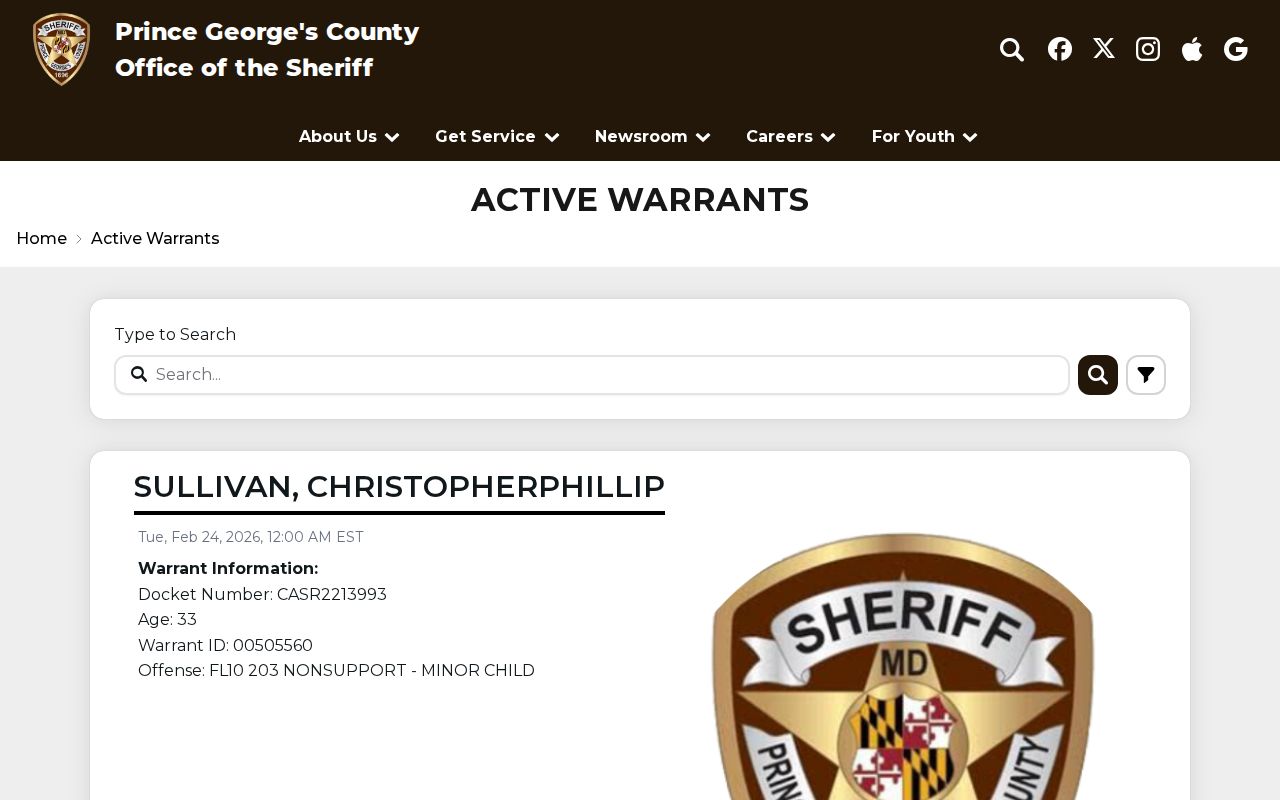
A card on the screen can start a check. It cannot end one. Only the Warrant and Fugitive Division or the court can confirm a status, and statuses change. An empty result does not mean no warrant exists. Records get delayed, withheld, filed under a different name, or left off the public list entirely. Some fall outside the county. Others were served after the page loaded. That is why the public search and direct confirmation work best together.
Confirm a Prince George’s Warrant
Move from the public card to an official answer. The Sheriff's Office executes warrants in the field. The Maryland Judiciary keeps the court case and docket. Neither source covers everything, so a thorough check uses both.
- Search the Active Warrant Database with the person’s full name and reasonable name variations.
- Record the warrant ID, docket number, date, and alleged offense shown on a possible match.
- Contact the Warrant and Fugitive Division at 301-780-8500 or shf-warrants@co.pg.md.us for current warrant-unit information.
- Use Maryland Judiciary Case Search to review the linked public docket, then contact the clerk when live status matters.
- If the warrant may concern the person making the inquiry, speak with counsel or the court about a lawful resolution or surrender process.
Case Search is only a summary. Juvenile, sealed, and shielded matters stay out of the online view. Some favorable outcomes drop off over time, too. For an old wanted post, the courthouse record may be the only way forward. The clerk can also show how a case actually ended.
Prince George’s Warrant Types
The public listing can trace back to different court or law-enforcement events. These plain distinctions explain why a warrant result, a wanted post, and a booking record are three different things.
| Record type | Practical distinction |
|---|---|
| Arrest warrant | A court-authorized direction to arrest based on an alleged offense. |
| Bench warrant | A court order commonly tied to a missed appearance or failure to follow a court direction. |
| Wanted post | A selected Sheriff public notice, which may include an image and tip request. |
| Booking record | An intake record made after an arrest; it does not prove guilt. |
| Court disposition | The later outcome, such as dismissal, acquittal, plea, conviction, or a pending status. |
A warrant can exist before any arrest. Once it is served, the person may be booked or released. Some are transferred, and some are held. Plenty of arrests happen without a Most Wanted appearance. For current custody, contact the Department of Corrections. Skip the wanted archive for that.
Prince George’s Anonymous Tips
The Sheriff's Submit a Tip form takes information about an investigation. It is not for emergencies. Contact details on the form are optional. Want a stronger anonymous route? Prince George's Crime Solvers offers a secure web tip, the P3 Tips app, texting, and the line 1-866-411-TIPS. Every tip gets a unique ID, so you can trade messages with investigators without giving a name.
Anonymous line: 1-866-411-TIPS
Availability: 24 hours a day, 7 days a week
Online and app: secure tip form and P3 Tips
Emergency: call 911
The official Crime Solvers explanation shows how the tip ID and anonymous channels work.

Tips go straight to the investigators who work the case. An anonymous report gives them a lead to chase. No name is required.
Prince George’s Warrant Unit
Warrant enforcement in Prince George's County sits with the Sheriff's Warrant and Fugitive Division. The team logs misdemeanor and felony warrants into official databases. Members work the warrants daily, help outside jurisdictions, and move fugitives where they need to go. Want to reach them? Call 301-780-8500 or email shf-warrants@co.pg.md.us. The main office sits at 5303 Chrysler Way, Upper Marlboro, Maryland 20772. These contacts handle warrants, not jail lookups. The Warrant and Fugitive Division page posts the official phone and email plus a full description of what the unit covers.
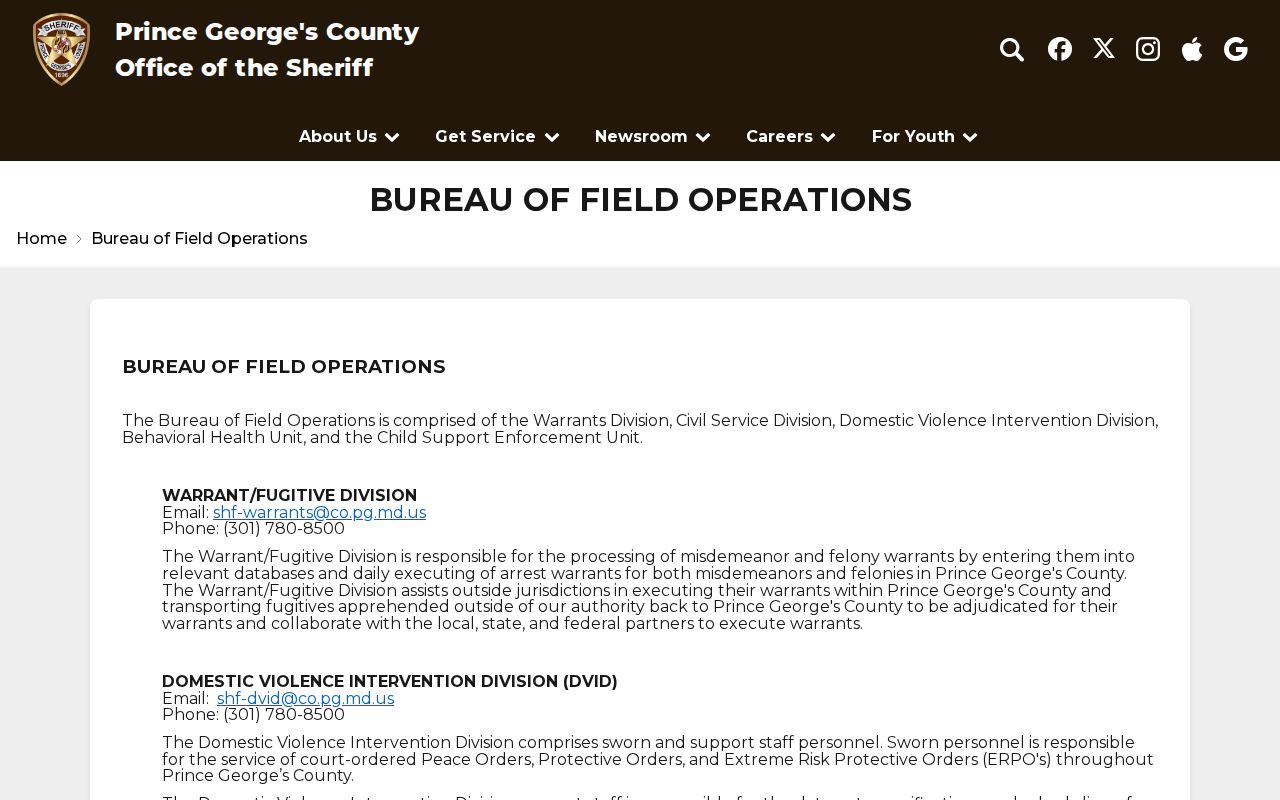
Database cards can go stale. When a warrant question needs a live answer straight from the agency, this division is the right place to confirm it.
Wanted Posts, App, and Custody
The Prince George's Sheriff MD app is free on the Apple App Store and on Google Play. Its official descriptions mention public-safety updates, news, crime reporting, and tip submissions. There's no jail locator, booking roster, or booking-photo feed inside. Treat the app as a way to follow Sheriff news, nothing more.
Knowing who handles what saves real headaches here. The Sheriff posts selected wanted material and maintains the warrant database. PGCDOC runs the Prince George's County Correctional Center and fields current-detention questions. Maryland courts show how a public case moves forward. Each stage has its own custodian, and the right one keeps the facts straight.
Status can shift quickly after a warrant goes public. An arrest may follow. Processing happens at the Correctional Center or at PGPD District I headquarters in Hyattsville. A District Court Commissioner then reviews the case. From there, the person might be released with conditions, held for a bond review, kept in custody, or routed into another jurisdiction's process. A dated wanted image can't tell you which of those happened.
For the court stage, Maryland Case Search helps, though protected matters may be missing from the public display. For county custody, PGCDOC's phone-based inmate line is the stronger check. A sentence to a state facility shifts the task to the Maryland Department of Public Safety and Correctional Services locator. A federal transfer calls for a federal locator. Matching the source to the stage avoids one common error. It stops you from treating "wanted," "arrested," "booked," and "currently held" as the same thing.